Friday, January 16, 2009

What To Pack In Your Labor Bag


FOR YOU- labor

• Your birth plan.

• Your insurance card and any hospital paperwork you need.

• Your eyeglasses, if you need any. Even if you usually wear contacts, you'll probably need or want to take them out at some point during your stay.

• A hair band and barrettes, if you think you might want them.

• Lip moisturizer- This is an item most mommies-to-be don't think about bringing to the hospital, but believe it or not, all the heavy breathing and licking your lips during labor will make your lips VERY chapped and sore, so you will DEFINITELY want to bring this!

• A bathrobe, nightgown, slippers, and a couple of pairs of socks. Hospitals provide gowns for you to use during labor and afterward, but most will allow you to wear your own clothes if you prefer. Choose something loose and comfortable that you don't mind getting ruined. You'll need to wear a gown instead of pants so that your practitioner can check your cervix. Choose a top with short, loose sleeves so you your blood pressure can be checked easily and so you can slip your top off easily if you want to change and have an IV in place. You might also want to bring your own slippers and robe for walking around during the early stages of labor. If you don't want to risk soiling your robe, you can ask for a second hospital gown to wear as a robe to cover your backside.

• Entertainment: Something to read, a handheld video game, an iPo....

• Massage oils or lotions, music, an extra pillow, whatever you need to help you relax. (If you do bring your own pillow, be sure to use a patterned or colorful pillowcase so it doesn't get mixed up with the hospital's.) You might consider bringing tennis balls or a rolling pin in case you have back labor and need them for massage.

For your partner/labor coach

• Money for parking and change for vending machines.

• A few basic toiletries, such as a toothbrush, toothpaste, shampoo, deodorant.

• A change of clothes

• Some snacks and something to read during the early stages.

• A camera/video camera and film or tape or a memory card and batteries. Someone has to document the big event! (NOTE: Not all hospitals allow videotaping of the birth itself, but there's usually no rule against taping during labor or after the birth.)

• A bathing suit. If your partner wants to take a bath or shower during labor, you may want to jump in with her.

FOR YOU- Postpartum

• A fresh nightgown.

• Snacks! After many hours of labor, you're likely to be pretty hungry and you don't want to have to rely on the hospital's food. So bring your own crackers, raisins, and granola bars.

• A nursing bra, breast pads, and maternity underwear, if you'd prefer not to wear the net panties they'll give you at the hospital. Chances are, whatever underwear you do wear the first few days will get stained, even with sanitary pads (which the hospital provides).
Also bring some of your OWN pads to place into your panties- the ones the hospital gives you are like giant boats!

• Toiletries. Toothbrush, toothpaste, shampoo, conditioner, body soap, hairbrush, lip balm, deodorant, lotion, and makeup: if it's important to you. You might also want to put some make-up on in the early stage of your labor before things get rough (if you have time), because some mommies like to look nice for the pictures that will probably be taken of them.
Just a reminder: Hospitals will have soap, shampoo, and lotion, but you might prefer your own brands.

• Your address book and prepaid phone card or cell phone. After the baby's born you'll want to call family and friends to let them know the good news. Note: Some hospitals don't allow cell phones to be used in the labor and delivery area, so you may want to ask about it ahead of time.

• A going-home outfit. Bring something roomy and easy to get into — believe it or not, you'll probably still look 5 or 6 months pregnant — along with a pair of flat shoes. The last thing you'll be worrying about when you go home is whether your outfit is fashionable.

For your baby

• An infant car seat. You can't drive your baby home without one!

• A going-home outfit (one-piece stretchy outfits are easiest) and a snowsuit if it's very cold

• A receiving blanket/ burp cloth (a heavy one if the weather's cold)

• A pair of socks or booties

• A cap (although they'll usually give you one at the hospital)

• Baby nail clippers or emery board. "The hospital where my son was born didn't supply clippers for fear of liability, and as a consequence my son gouged his face before he was 12 hours old.
Also bring some baby mittens, so that your baby doesn't scratch his/her face! Their nails can usually be really long after they're first born!

What NOT to bring

• Jewelry

• Lots of cash, credit cards, or any other valuables

• Work. Yes, we actually know fast-track types who have sent business e-mails from the hospital room, made work-related phone calls, and reviewed spreadsheets.

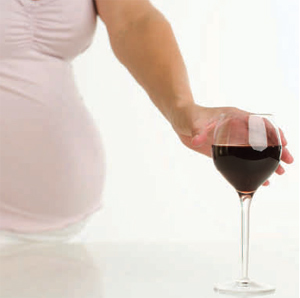
Drinking During Pregnancy~ Another BAD Idea


How much alcohol is too much?
Alcohol and pregnancy don't mix. That's because is it known to be harmful to a developing baby- even though no one knows EXACTLY what harmful effects even the smallest amount of alcohol has on a developing baby. All public health officials in the United States recommend that mothers-to-be play it safe by steering clear of alcohol entirely.

"We don't really know what a safe level of alcohol consumption is for a pregnant woman — and it's probably different for every woman because no one metabolizes alcohol in the same way," says Pam Phipps, research manager of the fetal alcohol and drug unit in the Department of Psychiatry and Behavioral Sciences at the University of Washington in Seattle. "Since it's impossible to identify a safe dose, we advise abstinence." So do experts at the American College of Obstetricians and Gynecologists and the American Academy of Pediatrics.

What effects could alcohol have on my baby?
When you drink, the alcohol quickly travels through your bloodstream to your baby. Your baby may end up with higher levels of blood alcohol than you have. Basically, if you are getting drunk, your baby is getting drunk- and the effects of drinking can be MUCH greater on your baby than you.--- I mean, think about it: you wouldn't give your newborn a shot of vodka, would you?

Drinking endangers your growing baby in a number of ways: It increases the risk of miscarriage and stillbirth. As little as one drink a day can increase the odds for low birth weight and raise your child's risk for problems with learning, speech, attention span, language, and hyperactivity. And some research has shown that expectant moms who have as little as one drink per week are more likely than nondrinkers to have children who later exhibit aggressive and delinquent behavior.

The most severe result of alcohol use is fetal alcohol syndrome (FAS), a permanent condition characterized by poor growth, abnormal facial features, and damage to the central nervous system. Babies with FAS grow poorly in the womb or after birth, or both. In addition to abnormal facial features, they may have abnormally small heads and brains; heart, spine, and other anatomical defects. The central nervous system damage may include mental retardation, delays in physical development, vision and hearing problems, and a variety of behavioral problems.

Frequent drinking (seven or more drinks per week, including mixed drinks, wine, and beer) or binge drinking (five or more drinks on any one occasion) greatly increases the risk that your baby will suffer from FAS. But babies whose moms drink less can also develop this syndrome. And babies exposed to alcohol in utero — even if they don't have full-blown FAS — may still be born with some of these birth defects or later exhibit a number of mental, physical, or behavioral problems.

According to the Centers for Disease Control, fetal exposure to alcohol is one of the main preventable causes of birth defects and developmental problems in this country. More than 10 percent of women in the United States drink during pregnancy, and one in 30 pregnant women drink frequently or binge drink: The babies of all these women are at risk. So whether you have a severe drinking problem or a more moderate one, if you find yourself unable to completely give up alcohol, it's vital to get help as soon as possible. Talk to your provider about counseling or treatment options.

What about "nonalcoholic" beer and wine?
The term "nonalcoholic" is a bit misleading when it comes to the supposedly alcohol-free versions of beer and wine. In fact, all "nonalcoholic" beers and many nonalcoholic wines do contain some alcohol, typically less than half a percent. While few would say that the trace amount of alcohol in an occasional glass of nonalcoholic beer is going to harm your baby, it's something to be aware of — especially if you drink these beverages often or in large amounts. So before you drink up, read labels carefully and remember that "nonalcoholic" and "alcohol-free" aren't interchangeable terms: Drinks labeled nonalcoholic can contain trace amounts of alcohol, while those labeled alcohol-free can't.

Smoking During Pregnancy~ NOT a good idea!


Smoking during pregnancy will expose your baby to nicotine, carbon monoxide, and other harmful toxins that can stunt his growth — including brain growth. An expecting mom with a pack-a-day habit will reduce her baby's birth weight by about half a pound, on average. (Remember, "average" means that some babies are far more affected than others.) This is significant because low birth weight is one of the main factors linked to newborn illness, disability, and death.

Cigarette smoking is also associated with increased risk for many pregnancy complications. These include premature labor, ectopic pregnancy (in which the fertilized egg implants outside the womb), miscarriage, placenta previa, placental abruption, vaginal bleeding, and premature delivery.

The long-term consequences of smoking during pregnancy can linger far after childbirth. Recent studies suggest that babies born to mothers who smoked are more likely to have learning problems, short attention spans, and hyperactivity disorders. They're more vulnerable to breathing problems such as asthma. Smoking during pregnancy can also put your baby at risk for sudden infant death syndrome (SIDS).

What about Second hand smoke?
Second hand smoke during pregnancy is risky. Exposure to environmental tobacco smoke raises a non-smoker's risk of developing lung cancer by at least 15%. The American Heart Association says non-smokers exposed to second hand smoke have a 30% increased risk of dying from heart disease and are at increased risk of asthmatic attacks and emphysema.

We have firm evidence that the use of tobacco products by adults (environmental tobacco smoke) increases childhood mortality and morbidity; otitis media, tympanostomy, tonsillectomy, asthma, coughs, lower respiratory tract illness, hospitalisations, and deaths. The studies linking second hand smoke to pregnancy problems show mixed results.

A study, released at a 1996 meeting of the American Association for Cancer Research in Washington, says the compounds associated with second hand smoke can cause genetic damage and may be a prelude to childhood leukemia and other cancers. The study suggests that cancer-causing chemicals in cigarette smoke pass from mother to unborn baby, whether the mother smokes or not.

Pregnant women exposed to the secondhand smoke of co-workers or family members pass some of the blood-borne chemicals to their unborn babies, though babies of smokers have much higher levels of the chemicals. Researchers at the University of Louisville studied 410 pregnant women, measuring levels of three tobacco carcinogens in the mothers and their newborns-- benzo(a)pyrene, which causes lung and skin cancer; 4-aminobiphenyl, which causes bladder cancer; and acrylonitrile, which causes liver cancer.

All three substances attach themselves to hemoglobin, the oxygen carrying protein in red blood cells. The carcinogens continue to circulate through the babies' blood for the life of the red cells, about four months.
The study found that levels of the three chemicals were four to five times higher in the passive smokers' babies than in the non-smokers' infants and they were 10 to 20 times higher in the cigarette smokers' babies.
Here is a great link to help you quit smoking during pregnancy:http://www.babycenter.com/pregnancy-quitting-smoking